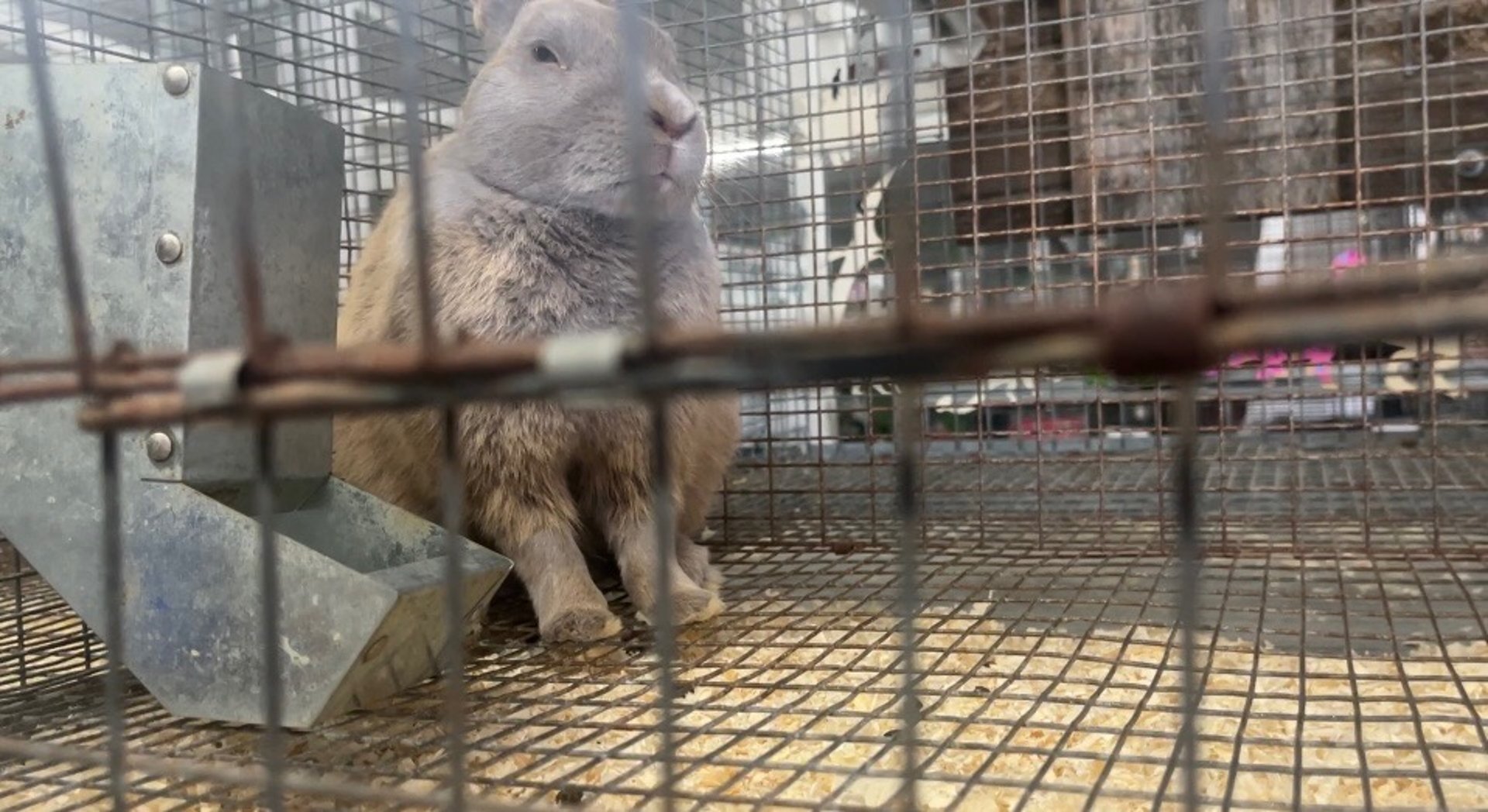
Peer Reviewed Scientific Studies on the Negative Effects of Wire Flooring in Rabbit Housing:
Buijs, S., Hermans, K., Maertens, L., Van Caelenberg, A., & Tuyttens, F. A. M. (2014). Effects of semi-group housing and floor type on pododermatitis, spinal deformation, and bone quality in rabbit does.
Key Findings: Rabbits housed on wire floors exhibited significantly higher incidences of pododermatitis (soar hocks) and spinal deformities compared to those on plastic slatted floors.
Masthoff, T., & Hoy, S. (2019). Investigations on the influence of floor design on dirtiness and foot pad lesions in growing rabbits.
Key Findings: Wire mesh floors complying with local animal welfare ordinances (11 mm slots) resulted in the highest frequencies of foot pad lesions and soiling compared to alternative plastic slatted floors. Conclusion: wire floors meeting regulatory requirements do not correspond to animal welfare.
Rauterberg, S. L., Bill, J., & Kemper, N. (2019). Evaluation of two different flooring designs for rabbit housing in accordance with German welfare regulations: Soiling and mortality.
Key Findings: While wire mesh flooring provided the cleanest environment, it was associated with higher mortality rates (11.7%) compared to alternative designs.
Ruchti, S., Meier, A. R., Würbel, H., Kratzer, G., & Gebhardt-Henrich, S. G. (2019). Progression and risk factors of pododermatitis in part-time group housed rabbit does in Switzerland.
Key Findings: Wire flooring was identified as a significant risk factor for ulcerative pododermatitis, with lesions progressing to severe stages more frequently on wire floors. Only partial recovery was observed even after extended periods, indicating chronic pain and welfare compromises.
Rosell, J. M., & de la Fuente, L. F. (2009). Effect of footrests on the incidence of ulcerative pododermatitis in domestic rabbit does.
Key Findings: Adding plastic footrests to wire cages reduced the incidence of ulcerative pododermatitis from 71.5% to 15.1% in breeding does. However, wire floors without footrests caused persistent lesions leading to premature culling, indicating that wire itself is the primary risk factor.